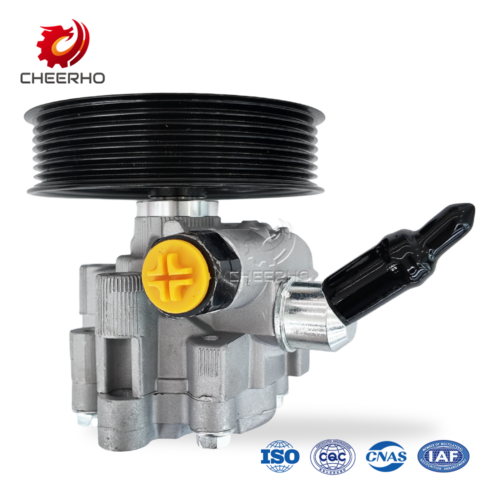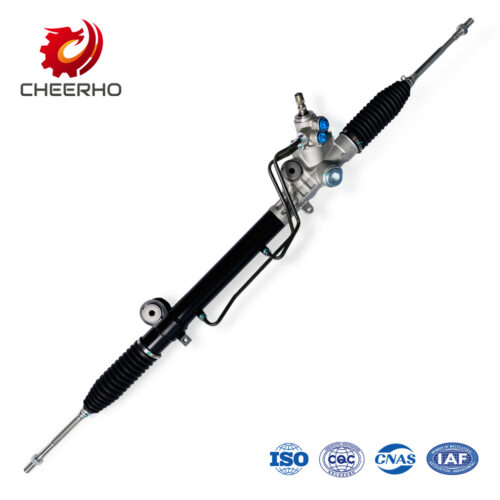
Power Steering System is a key automotive system that assists drivers in reducing steering operation force and improving steering comfort and stability. The core is to amplify the driver’s steering force through mechanical or electronic devices, especially when driving at low speeds or stopping.
Main categories
According to the source and structure of power, the mainstream types are divided into the following two categories:
- Hydraulic Power Steering System (HPS): The hydraulic pump driven by the engine is used as the power source to push the steering mechanism through the pressure of hydraulic oil. The structure includes hydraulic pump, oil storage tank, steering assist cylinder, control valve body, etc. It has mature technology and linear feel, but it has the characteristics of high energy consumption and slightly high maintenance costs (must replace hydraulic oil regularly). Early models are widely used.
- Electric Power Steering System (EPS): Use the on-board motor as the power source, and the motor power assist magnitude is accurately adjusted through the ECU (electronic control unit) according to the vehicle speed, steering angle and other signals. Simplified structure (no hydraulic pipeline), low energy consumption, fast response, and can optimize assist characteristics according to working conditions (such as reducing assist at high speed to improve handling stability), which is the preferred solution for current mainstream models (especially new energy vehicles).
Basic working principle (taking EPS as an example)
- Signal acquisition: Steering sensors (such as torque sensors, angle sensors) detect the steering torque and steering angle applied by the driver in real time, and the vehicle speed sensor synchronizes the vehicle’s driving speed.
- ECU decision-making: The electronic control unit (ECU) receives the sensor signal and calculates the required assist size and direction based on the preset program.
- Motor power assist: The ECU controls the motor to operate, outputs the corresponding auxiliary torque, and is transmitted to the steering transmission mechanism through the reduction mechanism (such as gears, belts).
- Mechanical execution: The auxiliary torque is superimposed with the driver’s steering force, jointly pushing the steering rod, steering knuckle and other components, and ultimately driving the wheel to deflect and complete the steering action.
Core role and development trend
- Core functions: reduce steering operation intensity and avoid driver fatigue; improve steering accuracy, especially in complex road conditions (such as congestion and parking); some high-end EPS can integrate active steering functions (such as adjusting steering ratio according to vehicle speed) to further optimize the driving experience.
- Development trend: With the upgrade of intelligent automobiles, the power steering system is deeply integrated with autonomous driving (ADAS). For example, the cancellation of mechanical connections through Steer-by-Wire technology to achieve more flexible steering control (such as automatic parking and active steering in lane keeping assistance), while also moving towards “lighter weight, higher integration, and smarter torque control”.